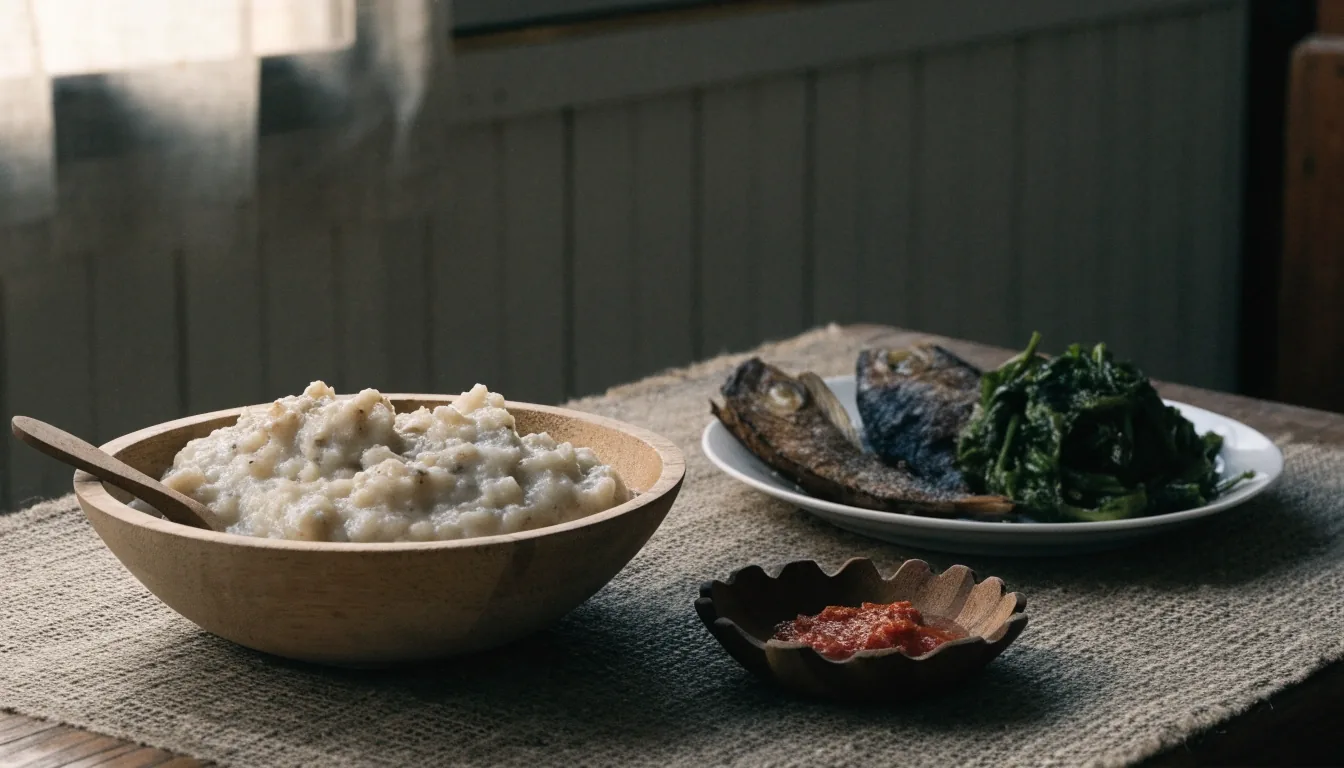
Overhead view of an Indonesian family table with papeda, greens, fish and tempeh
Meal ideas Regional staples, everyday plates

Local foods and meal ideas for everyday eating

Indonesian food is not a single cuisine. It shifts by island, region, and household. Here is how staples, traditional dishes, and market ingredients fit into varied, balanced eating without turning dinner into a nutrition lecture.

How to use this page

Work through the staples and dishes the way your household actually eats

Each chapter below takes one part of the local pantry and looks at how it lands on a plate. You do not need to change everything at once. Start with the staple you eat most, look at what sits beside it, and adjust from there. Nothing here is a rule set, and nothing here replaces advice for a specific health situation.

Where this page leads

Staples

Rice and the many staples around it

Rice is the default staple for most households, but it shares the table with corn, cassava, sweet potato, and noodles in different regions. What matters is the amount and what comes with it. A smaller portion of rice with more vegetables and protein behaves differently from a large portion eaten alone. Adjustments are usually about proportion, not removal.

Beras merah, red rice, is one example of a staple that varies the texture and colour of a plate without changing the meal's shape. Some households mix it with white rice for a first step. Others keep white rice and simply measure less of it while adding more vegetables. Both approaches are workable because neither one asks the kitchen to learn a new cuisine.

The practical question at the table is simple: what sits next to the rice? If the answer is a protein and a vegetable, the plate is already doing useful work. If the answer is rice alone, that is where the adjustment lives.

Staples you will meet

White rice daily base
Beras merah alternative base
Corn and cassava regional base
Noodles fast base

See also: the weekly rotation chapter below, which turns these bases into four or five repeatable meals.

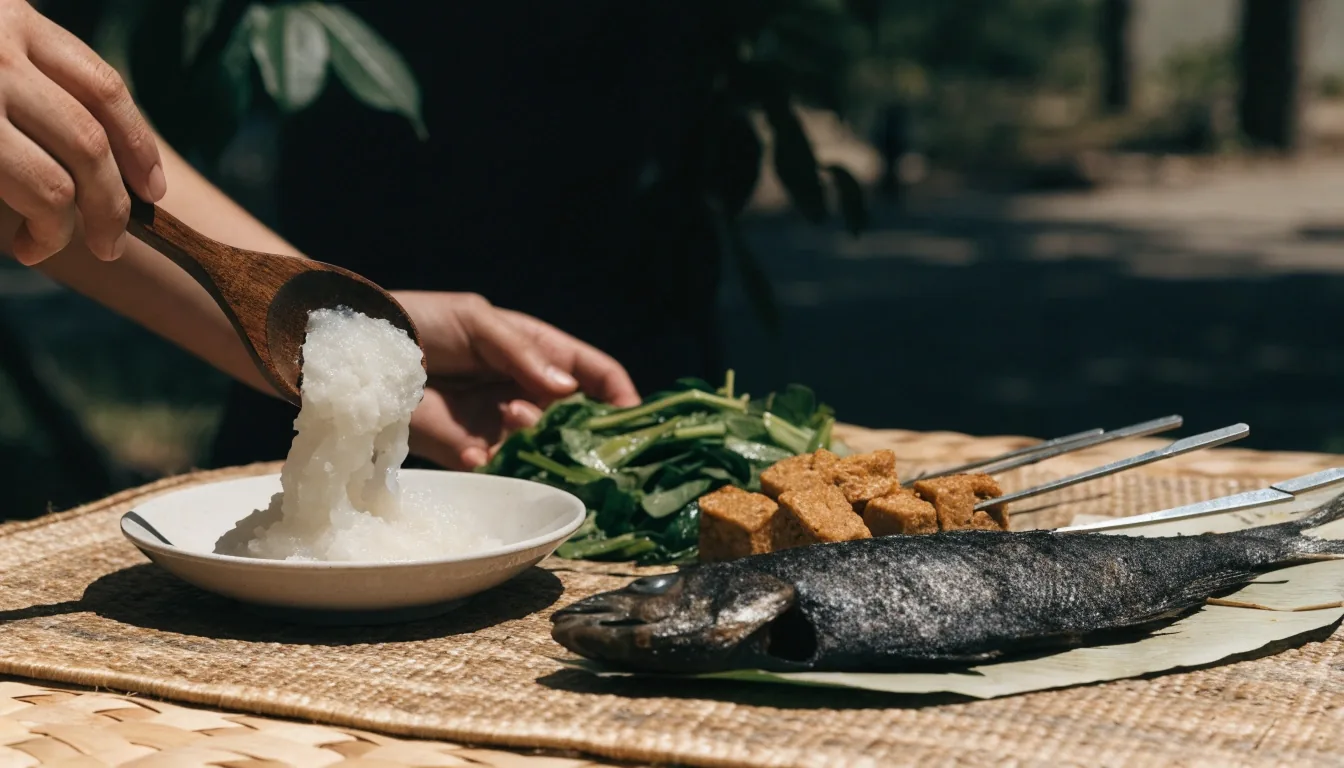
A bowl of papeda with grilled fish and greens beside it on a woven mat

Eastern Indonesia

Sagu and papeda from eastern Indonesia

Sago is a staple carbohydrate in parts of Maluku and Papua, and papeda is one of its best-known forms. It is low in fa and typically eaten with fish and vegetables, often in a watery, savoury broth. For anyone building a balanced plate, papeda shows how a regional staple can anchor a meal that is not rice-based.

It also shows that balanced eating has more than one template. A plate built around papeda with fish and greens covers the same ground as a rice plate with protein and vegetables. The difference is region and habit, not nutrition logic.

On a papeda plate

  • Base A measured serving of sago or papeda, eaten with a spoon rather than a fork.
  • Protein Grilled or boiled fish, often eaten in the same bowl or alongside it.
  • Vegetables Boiled or sauteed greens, sometimes added straight into the broth.
  • Broth A savoury, watery broth that carries flavour without much oil.

Protein

Tempeh and tahu as daily protein

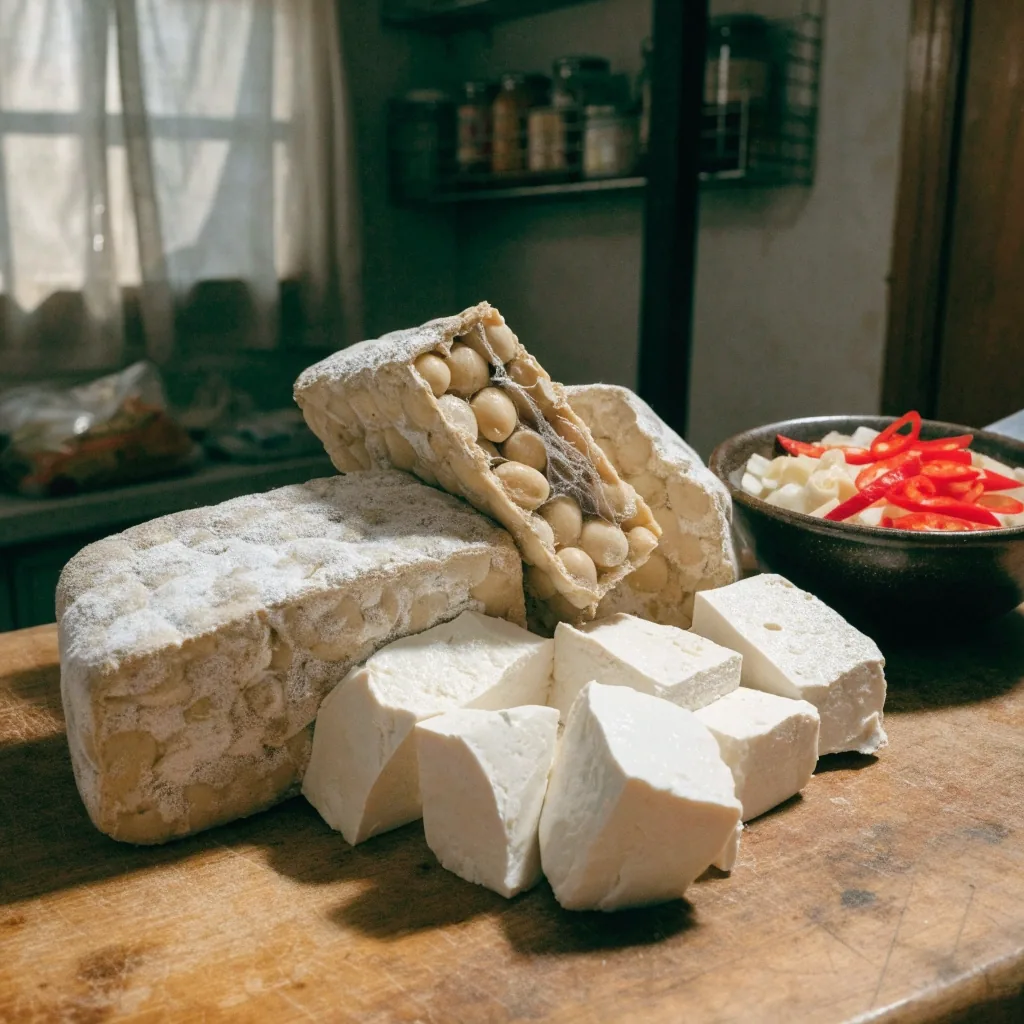
Fresh tempeh blocks and tofu pieces on a wooden cutting board with garlic and chilies

Tempeh and tahu are affordable, widely available, and easy to cook in many ways: fried, grilled, in soups, or as a side to vegetables. They work as the protein portion of a plate without needing to replace meat entirely. For households watching cost, they carry a lot of the load. For everyone else, they simply taste good.

The cooking method matters as much as the ingredient. Deep-fried tempeh absorbs oil, while grilled or pan-fried pieces with a little oil keep the plate lighter. Both are still tempeh. If fried food is part of the household routine, the useful move is to keep the portion measured and balance it with vegetables rather than to cut it out.

Cooked simply

Grilled or pan-fried with garlic, a little oil, and a spoon of kecap manis. Served beside greens.

Cooked in broth

Added to sayur or a clear soup so the protein and the vegetables arrive together in one bowl.

Traditional dishes

Traditional dishes that fit a balanced plate

Gado-gado, pecel, sayur asem, and similar dishes already combine vegetables, protein, and a sauce. The nutrition question is usually about portions and how much oil or sugar the sauce carries. These dishes are not one thing or the other; they are normal meals that can be adjusted. Serving them with a measured amount of rice keeps things simple.

Vegetable-forward

Gado-gado and pecel

Blanched vegetables, tofu, tempeh, sometimes egg, all brought together by a peanut sauce. Most of the plate is already vegetables and protein, which is a strong starting point. The sauce is where the plate can get heavy, so a lighter pour or a spoon served on the side keeps the dish working the way it looks like it should.

See also: tempeh and tahu as the protein base for both dishes.

Broth-based

Sayur asem and clear soups

A tamarind broth with melinjo, corn, peanuts, and leafy greens. Sour, watery, and light on oil, which makes it one of the easiest dishes to scale up at the table.

Rice companion

Serve with a measured portion of rice

These dishes are already close to a complete plate. Rice is still welcome, but the portion is the lever: a smaller scoop beside a full serving of gado-gado or sayur asem leaves room for the vegetables to do their job. If rice is eaten first and the dish is treated as a side, the balance flips. Setting both on the table at once usually fixes the habit without any calculation.

Fermented foods

Fermented foods in local cooking

Tempeh, oncom, tape, and fermented vegetables are part of Indonesian food history and current gut-health conversation. They fit naturally alongside fiber-rich vegetables and whole staples. None of them is a cure. Treat them as one good component of a varied diet, not as a shortcut.

If fermented foods are new to a household, the easiest introduction is the one already on the table. Tempeh is fermented. So is oncom, the West Java staple made from peanut or soybean pressings. Adding a spoon of fermented vegetables beside rice is another low-effort entry. Frequency and variety matter more than any single serving.

For anyone with a digestive condition or following a specific dietary plan, the sensible path is to mention fermented foods when talking to a dietitian rather than adjusting intake alone. That is a conversation, not a rule printed on a page.

Common in Indonesian kitchens

Tempeh

Fermented soybean cake, eaten across the archipelago and easy to grill or fry.

Oncom

A West Java fermented cake made from peanut or soybean pressings, often fried or grilled.

Tape

Fermented cassava or glutinous rice, sweet and soft, common as a snack or dessert.

Fermented vegetables

Pickled or salted vegetables served as a side, sharp and useful for cutting through richer dishes.

Market greens

Vegetables from the market

Kangkung, bayam, kacang panjang, terong, and kol are cheap, fast to cook, and available almost everywhere. Market vegetables often taste better than supermarket ones and cost less. Cooking them simply, with garlic and a little oil, is usually enough. A household that eats vegetables most days is already ahead.

Fish, eggs, meat

Fish, eggs, and animal protein

Fish is central in many coastal and river communities and is a strong source of protein and other nutrients. Eggs are the cheapest reliable animal protein for most families. Chicken and meat fit fine in smaller amounts. For anyone concerned about anemia or low iron intake, having animal-source foods regularly, alongside leafy greens, is one practical pattern worth discussing with a dietitian.

Fruit and sweets

Fruit, snacks, and traditional sweets

Fruit is often the easiest place to add something good to a day. Traditional sweets and snacks are part of the culture and do not need to be removed. The useful question is how often and how much. A pattern of mostly everyday foods with occasional treats tends to hold longer than an all-or-nothing approach.

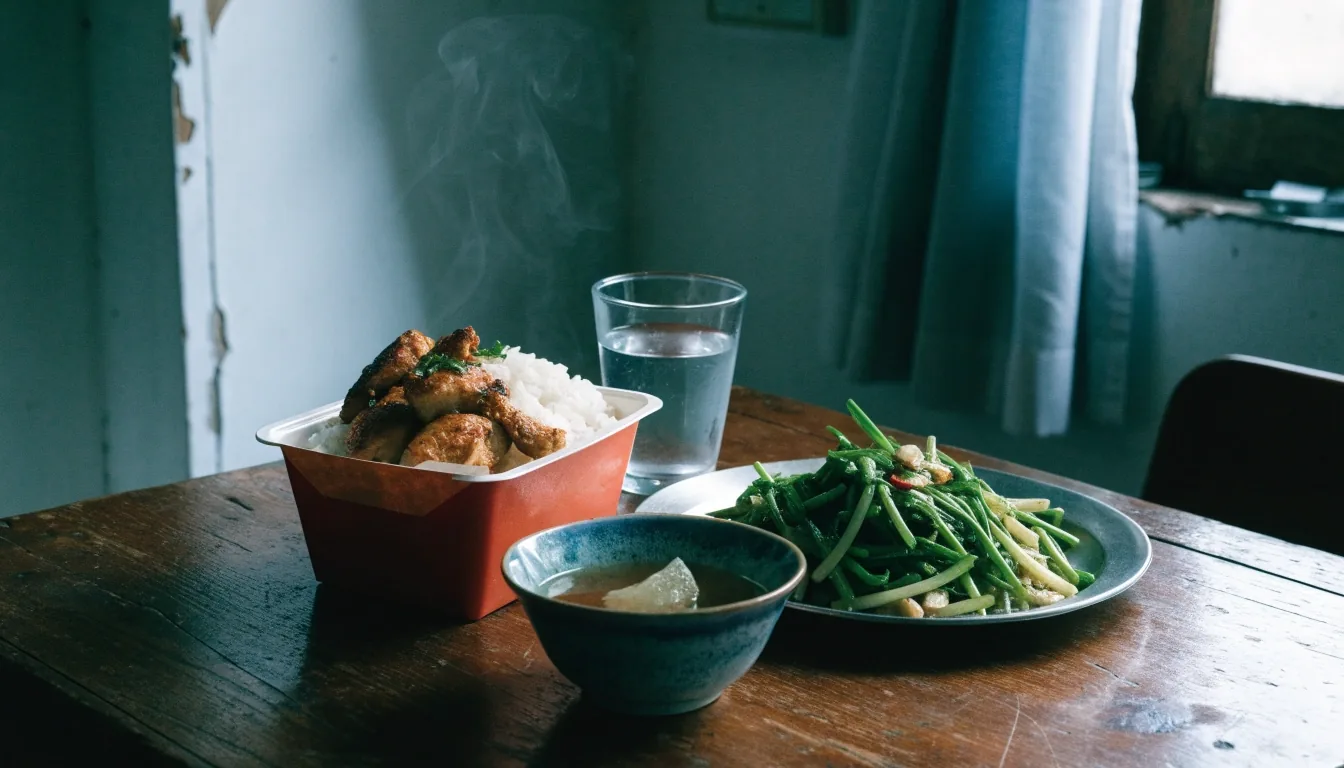
A mix of home-cooked and takeaway Indonesian dishes on one table

Weeknight reality

Cooking at home versus eating out

Many urban households mix home cooking, warung meals, delivery, and restaurant food in a single week. That is normal and the plan should account for it. When eating out, the choices shift toward grilled or steamed options and away from heavy sauces more often. When cooking at home, portions are easier to control. Both can work.

Eating out

Choosing at the warung or the restaurant

  • Grilled or steamed dishes over deep-fried ones, more often than not.
  • Sauce served on the side so the amount is your choice, not the kitchen's.
  • Vegetables ordered as a real dish rather than a garnish.
  • Water or unsweetened tea alongside the meal.

Cooking at home

Keeping the kitchen routine simple

  • Cook one vegetable dish and one protein dish, then let rice fill the rest.
  • Keep a bowl of cut market vegetables in the fridge for fast stir-fries.
  • Fry in batches and drain rather than cooking everything in deep oil.
  • Plate the food before it reaches the table so portions are visible.

Weekly rotation

Building a weekly rotation

A simple approach: pick four or five base meals your household likes, then rotate them with small variations. This reduces decisions and keeps the week varied. Exact menus are better built with a dietitian who knows your situation, your kitchen, and the foods your family actually eats.

The rotation below is an example of what a varied week can look like using dishes from earlier on this page. It is a starting shape, not a prescription. Swap in whatever is in season at your market, and keep one day flexible for leftovers or eating out.

An example week

Gado-gado with a small scoop of rice Vegetable day
Sayur asem with grilled fish Broth day
Tempeh, kangkung, and rice Home day
Papeda or noodles with vegetables Variation day
Leftovers or a warung meal Flexible day

See also: the Everyday Nutrition Guide for how to carry a rotation across a month.

Common questions

Questions visitors ask about local food and portioning

Do I have to stop eating white rice?

No. White rice is the everyday staple for most households in Indonesia, and it stays on the table. The adjustment that tends to matter is how much rice sits beside what. A smaller portion with more vegetables and a protein behaves differently from a large portion eaten alone. Beras merah or a mix of red and white rice is one option if a household wants more texture or fibre, but it is a swap, not a requirement.

Is street food or warung food off limits?

Warung food is part of daily life in most Indonesian cities and asking a household to avoid it does not survive a normal week. What helps is choosing dishes that are grilled, steamed, or broth-based more often, asking for sauce on the side, and ordering a real vegetable dish rather than treating greens as garnish. That keeps the warung habit workable instead of turning every lunch into a test of willpower.

Can I build a balanced plate without meat?

Yes. Tempeh, tahu, and oncom are widely available and inexpensive, and they carry the protein portion of a plate without meat. Gado-gado and pecel are already built this way. If animal-source foods are limited in a household, it is worth mentioning that when talking to a dietitian, because iron and vitamin B12 intake are easier to plan with a real picture of the week than with a general rule.

Do traditional sweets need to go?

No. Traditional sweets and snacks are part of the culture and removing them rarely holds. A pattern of mostly everyday foods with occasional treats tends to last longer than an all-or-nothing approach. The useful question is how often and how much, not whether the sweet exists at all. Fruit is usually the easiest place to add something good to a day alongside those treats.

Next step

Turn these meal ideas into a plan that fits your week

Where we are

NutriRasa Indonesia
Jl. Pemuda No. 10, Semarang, Jawa Tengah, 50132

Reach us

+62 24 354 7744
[email protected]

Open hours

Monday to Friday, 9:00 AM – 6:00 PM. Consultation times are arranged after registration, so the first step is simply to get in touch.