
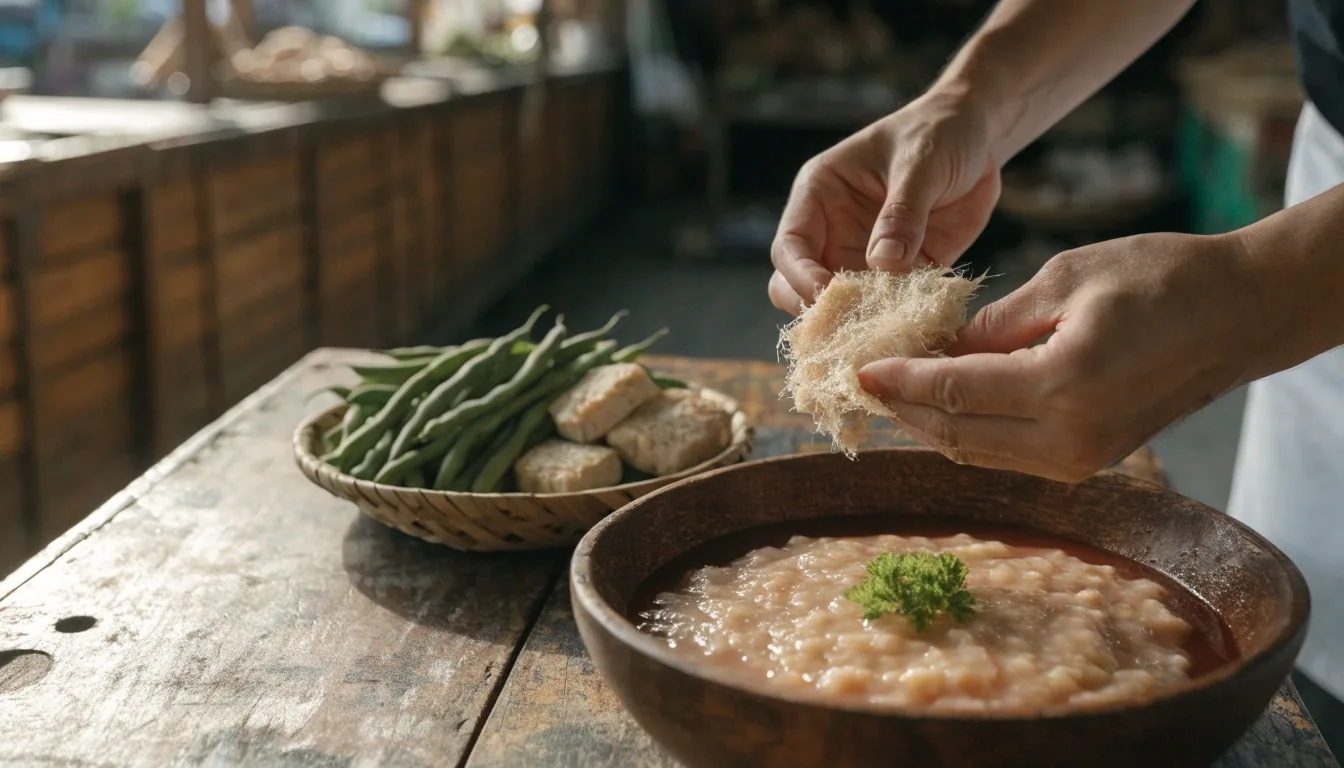
A tie-bound stack of blank reference cards resting on a reading-room table under cool light
EVERYDAY NUTRITION GUIDE

Everyday Nutrition Guide for Indonesian Households

Habits you can build into normal weeks: balanced plates, minimally processed foods where practical, and daily menus built from ingredients sold in the nearest market. Nothing here needs imported products or a special kitchen.

Instead of a diet

A set of habits you keep for years, not a strict protocol you break by Thursday

This guide is not a diet. It is a set of habits you can build into normal weeks: balanced plates, minimally processed foods where possible, and menus that use ingredients you can buy nearby. Nothing here requires imported products or a special kitchen.

Use it as a reference you return to. Pick one habit at a time — a vegetable at lunch, a grilled protein instead of fried, a glass of water before the afternoon snack — and let it settle for a fortnight before adding the next. See also the local food chapter for ingredient ideas if the structure is clear but the shopping list is not.

Best consulted weekly, not daily Written for Indonesian kitchens

The plate, in practice

The Isi Piringku frame in daily practice

Half the plate

Vegetables and fruit, in whatever form gets eaten

Isi Piringku suggests roughly half the plate for vegetables and fruit, and half for staples and protein. Kangkung, bayam, kacang panjang, kol, wortel and tomato cover most everyday ground, and a piece of papaya or banana counts on the fruit side. Frozen vegetables are a fair stand-in on a busy week — the plate only cares that they land on it.

The interesting decisions

Which staple, how much rice, fried or grilled

In practice, the interesting decisions are smaller than the diagram suggests: which vegetable is in the fridge, how much rice fills the fist-sized space, whether the protein is fried or grilled, and whether there is anything raw or fresh beside it. Start with one meal a day and build from there.

Most days, not every day

A plate that matches the guide often is the goal

A plate that matches the guide most days is the goal, not every single meal. Family celebrations, night markets and travel weeks are part of ordinary eating in Indonesia; the frame is something you return to on Monday, not something you fail on Saturday.

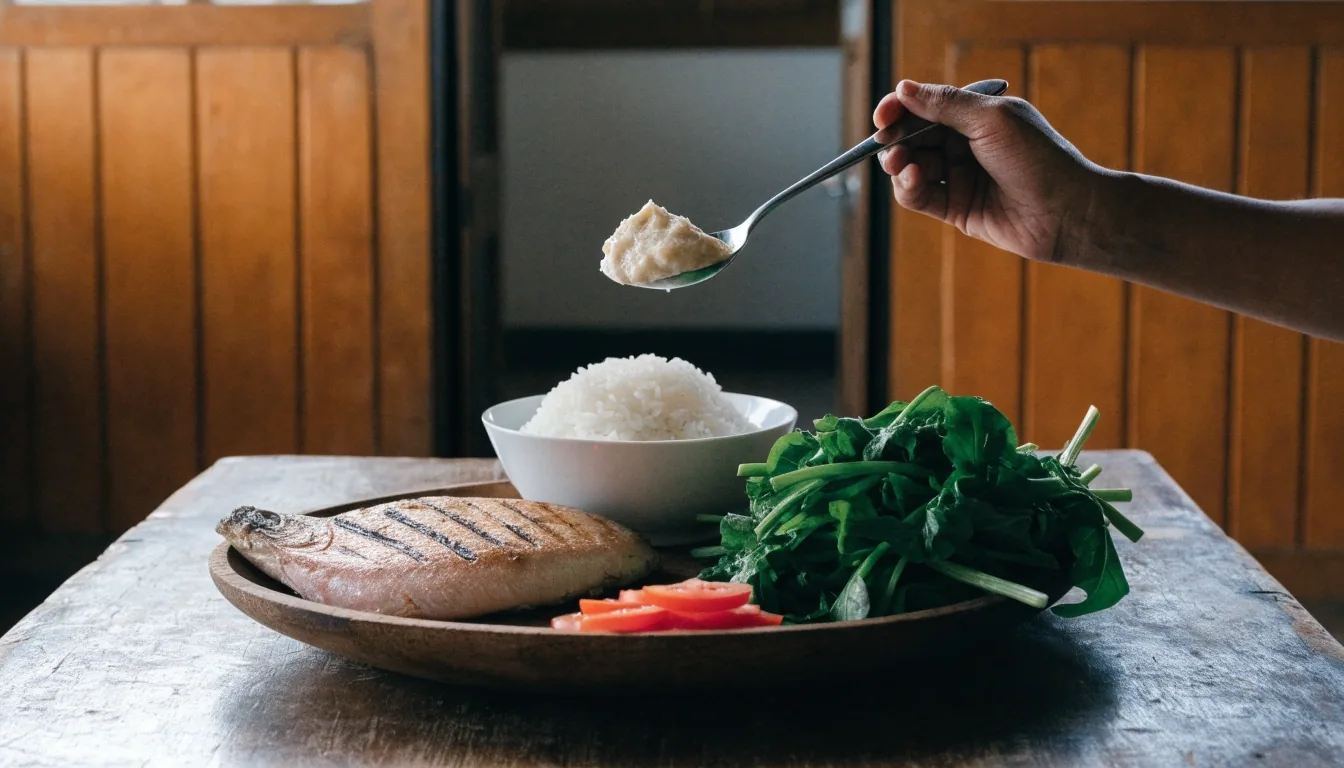
An everyday family table with papeda, greens, grilled fish and water arranged for a shared meal

Porsi seimbang

Porsi seimbang without weighing food

Balanced portions can be eyeballed. A palm-sized portion of protein, a fist of staples, and a generous serving of vegetables is a reasonable starting point for many adults, and it holds whether the staple is rice, sagu, corn or cassava. Your needs vary with age, activity and health context — which is exactly what a consultation can clarify. You do not need a scale to eat reasonably well.

Protein

One palm, at most two — tempeh, tahu, egg, fish, chicken.

Staples

One closed fist of rice or another staple, not two.

Vegetables

A generous scoop or two, filling the empty side of the plate.

Rhythm before content

Building a menu harian you can actually repeat

A day usually works better when it has a rhythm: something in the morning, a real lunch, a lighter evening, and one or two snacks if you are genuinely hungry. The content matters, but so does the pattern — most people abandon a menu because the schedule around it was unrealistic, not because the food was wrong.

Plan two or three default meals you can cook without thinking — something with tempeh, something with egg, something from the freezer drawer — then vary the rest of the week around them. Repetition is not failure; it is how habits hold. Once the defaults are automatic, adding a new vegetable or swapping fried for grilled costs almost nothing.

See also the fermented foods note below if you want to widen the flavour of the defaults.

A workable day

  • Morning Something small, water first
  • Lunch The plate that matches the frame
  • Afternoon Fruit or a small snack
  • Evening Lighter, earlier when possible
  • Anytime Water, before the snack

The times are yours to move. What holds the day together is not a clock — it is eating often enough that the evening meal is not a rescue operation.

What is on the plate

Rice, sagu and the produce sold at the end of your street

Staples

Rice is central, but it is not the only option on the shelf

Sagu, corn, cassava and noodles all appear in local diets, and regional dishes like papeda use sago as their base. What matters is the amount and what comes with it: a staple with vegetables and a protein behaves differently from the same staple eaten alone on a rushed morning. If rice sits heavy in your day, shifting one meal to sagu or cassava is a smaller change than it sounds.

Staple × vegetable × protein — the three-part habit the rest of this guide leans on.

Vegetables nearby

Kangkung, bayam, kacang panjang, kol, wortel, tomato

Fruit can be seasonal; papaya, banana and orange are common and reliable. Frozen vegetables are fine when fresh ones are not practical. The best vegetable is the one you actually cook.

Protein

Tempeh and tahu first, animal foods in small amounts

Tempeh and tahu are affordable, familiar and flexible. Eggs, fish, chicken and meat cover the animal side, and small amounts matter more than large portions. Iron-rich eating is easier when animal-source foods and leafy greens appear regularly.

If you are pregnant or managing anemia, discuss specifics with a dietitian or doctor rather than self-treating.

Gut health, without the hype

Fermented foods and gut health: one useful component, not a cure

Tempeh, oncom, fermented vegetables and similar foods appear often in Indonesian cooking and are part of current gut-health discussion. They fit naturally into balanced meals, especially alongside fiber-rich vegetables and whole staples. They are not a cure for anything. Think of them as one useful component among several — the fermented side dish that makes a plain plate taste better and adds something to the meal besides rice.

If your meals are mostly packaged snacks and rice, adding tempeh twice a week changes more than replacing your whole pantry in a weekend. Small, repeatable steps are the point of this guide.

Seen on many Indonesian tables

  • Tempeh Fried, steamed, or in a stew
  • Oncom West Java, often in sambal
  • Fermented vegetables As a side, alongside greens
  • Plain yogurt When it is already in the fridge

Nothing here needs a specialty shop. What matters is whether the food becomes part of the week, not how exotic it is.

Minimally processed where it fits

Not everything has to be cooked from scratch

Canned beans, frozen vegetables and plain yogurt can save a week. The practical distinction is between foods close to their original form and products with long ingredient lists you would not recognise. Aim for the former more often, without turning it into a rule you break daily.

Closer to the original

  • Fresh or frozen vegetables, plain rice, eggs, fish, tempeh
  • Canned beans or chickpeas in water, drained and cooked into a dish
  • Plain yogurt without added sugar, or fresh fruit as a snack

Longer ingredient lists

  • Snacks where the first three ingredients include sugar or palm oil
  • Sweetened drinks standing in for water during the day
  • Instant noodles as the default lunch rather than an occasional one

Not banned — just noticed. Awareness at the shelf is worth more than a list of forbidden foods.

Cooking methods

Cooking methods that change the plate

Frying adds oil and calories without adding much else. Grilling, steaming, boiling and stir-frying with a measured amount of oil keep dishes closer to their ingredients. This does not mean never frying — the fried tempeh is part of the cuisine. It means noticing how often fried food is the default and shifting some meals away from it.

Fried, shallow Oil-heavy, quick
Grilled, steamed, boiled Closest to ingredients
Stir-fried, measured oil Fast, portion-aware
Raw, added beside the dish Fruit, cucumber, tomato

The basics people skip

Hydration, regular meals and sleep quietly decide the rest

Water, regular meals and enough sleep affect how the rest of the plan goes. Skipping meals often leads to overeating later, and thirst is easy to mistake for hunger — especially on a long afternoon. None of this is dramatic advice. It is the part of the picture that gets ignored while people argue about specific foods.

A glass of water before each meal, especially at lunch
Three real meals rather than constant grazing
Enough sleep to feel hungry at breakfast

When a guide is not enough

When to get personalized guidance

General guidance has limits. If you are managing a health condition, planning meals in pregnancy, feeding a child with specific needs, or simply not getting anywhere on your own, a consultation adds context a guide cannot. Bring your actual week — the office lunches, the night markets, the cooking equipment you own — and the plan gets specific to you instead of generic.

Registration is handled through the contact page. Bring one normal week of eating and the questions you want answered.

Common questions

What readers ask first

Do I have to follow the guide exactly?

No. It is a frame for everyday decisions, not a strict protocol. A consultation can adapt it to your situation — the food you actually cook, the meals you actually skip, and the schedule you actually keep.

Do I need to weigh my food or count anything?

No scale is required for everyday eating. Palm-sized protein, a fist of staples and a generous serving of vegetables are wide enough ranges to work with. A dietitian may still use more specific measures for a health condition, but that is a conversation, not a requirement of the guide.

Is rice off the list?

No. Rice is central for most Indonesian households, and this guide does not ask you to remove it. What matters is the amount on the plate and what comes with it — vegetables, a protein, and enough water through the day.

Where can I find local food ideas that fit this?

The local food chapter collects everyday meals and shopping ideas based on the ingredients this guide leans on. It is written for the market you actually walk past, not for a specialty store.

Can a dietitian help with a specific health condition?

If you are managing a diagnosed condition, pregnant or feeding a child with specific needs, bring the topic to a dietitian or your doctor. A consultation can help organise the practical side of eating; it does not replace medical care. This page is general education, not medical advice.

Where to continue

Take the guide into a real week with one small shift at a time

Start with the meal you already eat most often. If you want help turning these habits into a plan for your household, a registered dietitian can walk through it with you.

NutriRasa Indonesia Jl. Pemuda No. 10, Semarang, Jawa Tengah, 50132 +62 24 354 7744 Monday to Friday, 9:00 AM – 6:00 PM